Methodology
Our calculation methodology
Our core expertise is turning raw data into information that everyone can understand. To be useful to a sustainability director, a public buyer or an auditor, that information has to rest on recognised sources and on a method that can be explained. Here is ours.
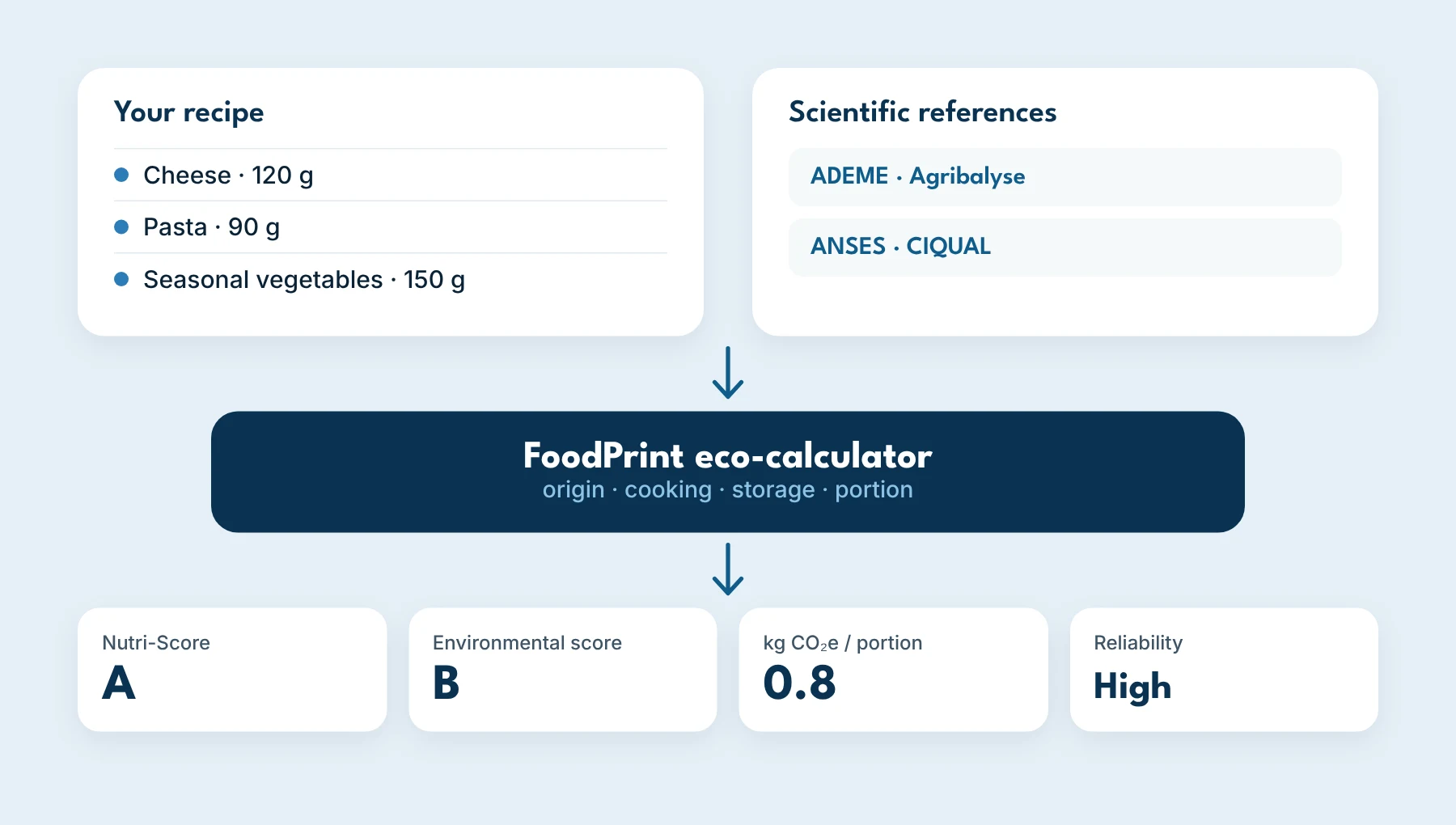
Recognised scientific references
Environmental data comes from AGRIBALYSE®, the database published by ADEME, the French Agency for Ecological Transition, which brings together life cycle assessments (LCA) of food products. Regularly updated, it is currently the most advanced body of work on the environmental impact of food.
Nutritional data comes from CIQUAL, the French reference table on food composition published by ANSES. Relying on these references means results that your clients, auditors and public buyers recognise.
The FoodPrint eco-calculator
We have developed an eco-calculator that computes the carbon footprint of each dish from its ingredients and their quantities. It takes into account the information you provide on the origin of ingredients, cooking methods and storage, to come as close as possible to the reality of your kitchens.
Each ingredient is matched to the closest reference in the reference databases, and a reliability score shows the quality of that match. You always know how much weight to give a result.
From reference data to recipe
These databases provide data food by food. Turning them into a reliable score for a catering recipe takes work we have been building since 2019: matching each ingredient in your technical sheets to the right reference despite the variety of supplier names, factoring in origin, cooking and storage, aggregating results per portion, measuring their reliability and delivering them inside your tools.
How the Nutri-Score is calculated
The Nutri-Score summarises the nutritional quality of a dish on a scale from A to E. It is calculated per 100 g from the content of components to encourage (fibre, protein, fruit, vegetables, pulses, nuts, rapeseed, walnut and olive oils) and components to limit (energy, saturated fat, sugars, salt).
How the environmental score is calculated
Our environmental score builds on life cycle assessment, complemented by bonuses and penalties that capture issues LCA does not cover: biodiversity, protection of endangered species, local sourcing and seasonality.
The LCA itself aggregates more than ten impact categories, including climate change, fine particles, water resource depletion, land use and eutrophication. Climate change is only one part of the total, but it correlates with almost all other indicators, which makes it a sound first-level indicator for your guests.
Built with regulation in mind
The method is designed to meet the data needs of corporate sustainability reporting (CSRD), the environmental criteria of public procurement and the consumer information requirements that are spreading across Europe.
Let's see what your menus have to say.
In 30 minutes, we review your situation and identify together the offer that fits you best.